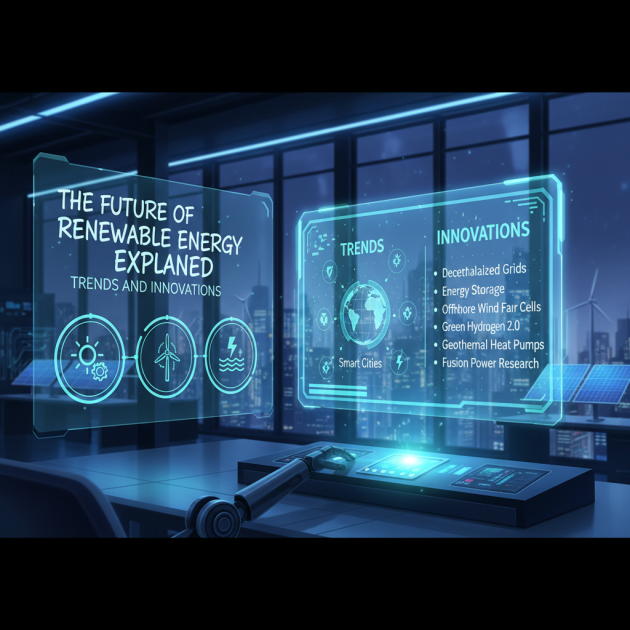

The Future of Renewable Energy Explained
The shift towards renewable energy is not just a trend; it is a necessity for combating climate change and ensuring a sustainable future. With advancements in technology, policy changes, and growing public awareness, the future of renewable energy is brighter than ever. In this article, we’ll explore the key trends and innovations that are shaping the future of this critical sector.
Key Trends in Renewable Energy
- Decentralization of Energy Production: The rise of microgrids and decentralized energy systems allows communities to generate their own power, reducing reliance on centralized power plants.
- Integration of Energy Storage: Technologies like batteries enable the storage of excess energy generated from renewable sources, making energy available on demand and improving reliability.
- Smart Grids: The development of smart grid technology enhances the efficiency of energy distribution, allowing for better management of energy resources and consumption.
- Increased Efficiency: Advances in renewable technologies, such as solar panels and wind turbines, are leading to greater energy capture and efficiency, making renewables more competitive with fossil fuels.
Innovations Driving Renewable Energy
Innovation is at the heart of the renewable energy revolution. Several groundbreaking technologies are paving the way for a more sustainable energy landscape:
- Floating Solar Farms: These innovative solar installations can be set up on bodies of water, reducing land use and increasing energy generation efficiency due to cooling effects.
- Advanced Wind Turbines: New designs and materials are leading to larger, more efficient turbines that can generate more electricity from lower wind speeds.
- Hydrogen Fuel Cells: As a clean energy carrier, hydrogen produced from renewable sources can be used in various applications, including transportation and energy storage.
- Artificial Intelligence (AI): AI and machine learning are being utilized to optimize energy production and consumption, predict energy demand, and manage renewable energy systems effectively.
Policy Changes and Investment Trends
Government policies play a crucial role in the advancement of renewable energy. Many countries are implementing legislation that supports renewable energy development, including:
- Subsidies and Incentives: Financial incentives encourage the adoption of renewable technologies among consumers and businesses, making clean energy more accessible.
- Carbon Pricing: Implementing carbon taxes or cap-and-trade systems encourages companies to reduce emissions and invest in renewable energy sources.
- International Agreements: Global initiatives like the Paris Agreement drive nations to commit to reducing greenhouse gas emissions and increasing the share of renewables in their energy mix.
The Role of Public Awareness
Public awareness and demand for renewable energy also play a significant role in shaping the future of this sector. With increasing concerns about climate change and environmental degradation, consumers are more inclined to support sustainable practices:
- Consumer Demand: More individuals and businesses are opting for green energy solutions, which pushes utilities to invest in renewable resources.
- Community Initiatives: Grassroots movements and community-based projects are driving local renewable energy initiatives, fostering a culture of sustainability.
Conclusion
The future of renewable energy is bright, driven by technological advancements, supportive policies, and a growing public consciousness about sustainability. As we continue to innovate and invest in clean energy solutions, we move closer to a world powered by renewables, reducing our reliance on fossil fuels and combating climate change effectively.