
Introduction
As we enter 2026, Europe is witnessing a dramatic increase in the frequency and intensity of extreme weather events, including heatwaves, floods, and storms. These phenomena are not merely natural occurrences; they are stark reminders of the pressing challenges posed by climate change. In response, governments across the continent are stepping up their efforts to combat this crisis and ensure the safety of their citizens.
The Impact of Extreme Weather Events
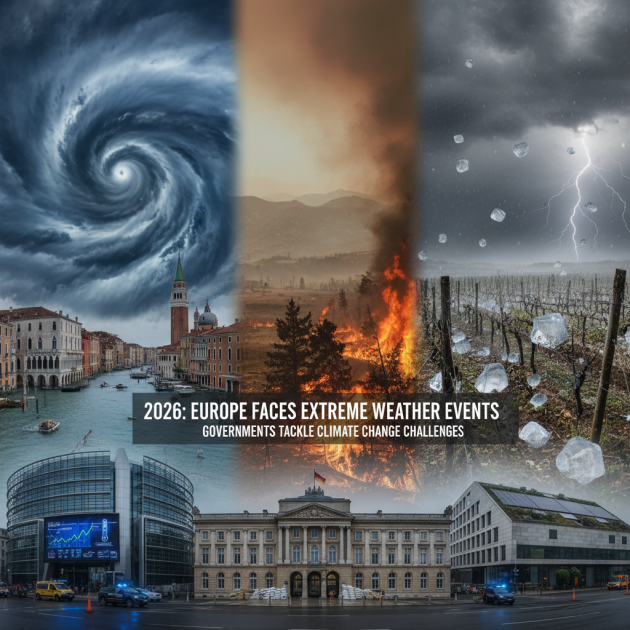
This year alone has seen record-breaking temperatures in Southern Europe, where heatwaves have resulted in devastating wildfires across parts of Spain and Greece. Meanwhile, Northern Europe has not been spared, with unprecedented rainfall leading to severe flooding in Germany and the Netherlands.
Heatwaves and Wildfires
In Spain, temperatures soared to an alarming 46°C (115°F), leading to wildfires that have ravaged thousands of hectares of forest. Local communities faced evacuations, and many homes were destroyed. The Spanish government has activated emergency response plans, deploying firefighters and resources to combat these blazes.
Flooding and Its Consequences
On the other hand, Germany experienced catastrophic flooding in early summer, resulting in significant damage to infrastructure and displacing thousands of residents. The German government has since announced a comprehensive review of its flood defense systems, aiming to bolster resilience against future occurrences.
Governmental Responses to Climate Change
In light of these extreme weather events, European governments are taking a multifaceted approach to address climate change. Here are some of the key strategies being implemented:
- Investment in Renewable Energy: Many countries are increasing their investments in renewable energy sources such as wind, solar, and hydroelectric power. For example, Denmark aims to become the world’s first carbon-neutral country by 2050, with plans to expand its offshore wind farms.
- Enhancing Climate Resilience: Governments are also focusing on enhancing infrastructure resilience to withstand extreme weather. The Netherlands has been a pioneer in flood management and is now investing in innovative water management technologies to protect its low-lying areas.
- Legislation and Policy Reform: The European Union is pushing forward with its Green Deal, which aims to reduce greenhouse gas emissions by at least 55% by 2030. This includes stricter regulations on industrial emissions and promoting sustainable agricultural practices.
- Public Awareness Campaigns: Many governments are launching campaigns to educate the public on climate change impacts and encourage sustainable practices. France has implemented programs to promote energy efficiency in homes and businesses.
International Cooperation
Addressing climate change is a global challenge that requires international cooperation. In 2026, European nations are increasingly collaborating on cross-border initiatives. The EU has engaged in dialogues with neighboring countries to share best practices and technologies for climate adaptation and mitigation.
Funding and Support
Financial support is critical for developing nations, many of whom are already facing the brunt of climate impacts. The European Union has committed to providing funding for climate resilience projects in vulnerable regions, ensuring that no one is left behind in the fight against climate change.
Conclusion
The extreme weather events of 2026 serve as a wake-up call for Europe and the world. As governments respond to these challenges, the commitment to combat climate change is becoming stronger and more urgent. With innovative policies, community engagement, and international collaboration, Europe is taking significant strides towards a sustainable future.