
Introduction
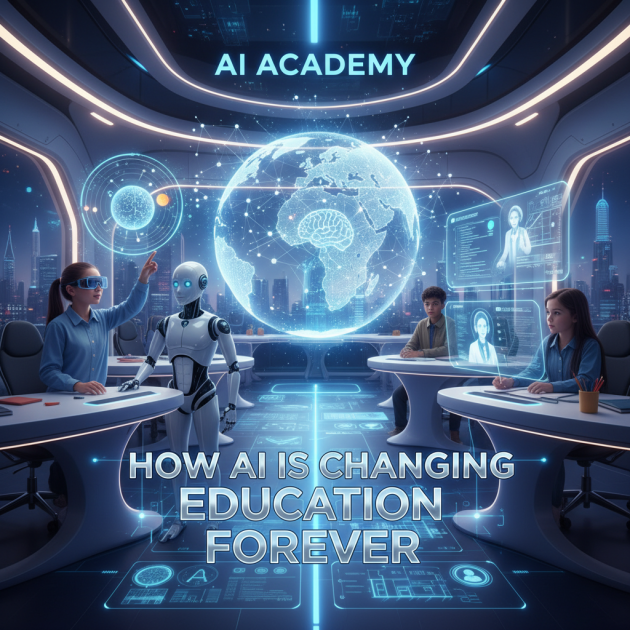
Artificial Intelligence (AI) is revolutionizing many sectors, and education is no exception. From personalized learning experiences to administrative efficiency, AI is reshaping how educators teach and students learn. In this article, we will explore the various ways AI is changing education forever and what this means for the future of learning.
Personalized Learning
One of the most significant impacts of AI on education is the ability to provide personalized learning experiences. AI algorithms can analyze individual student data to tailor educational content to meet their unique needs. This means that:
- Students can learn at their own pace, allowing advanced learners to progress faster while providing additional support for those who need it.
- Teachers can access insights about student performance, enabling them to adapt their teaching strategies accordingly.
By using platforms that incorporate AI, like adaptive learning systems, students receive customized resources and assessments, thereby enhancing engagement and understanding.
Intelligent Tutoring Systems
AI-powered intelligent tutoring systems offer students one-on-one assistance, mimicking the benefits of personal tutoring. These systems can:
- Provide instant feedback on assignments and tests.
- Identify areas where students struggle and offer targeted exercises to improve.
- Encourage self-directed learning by guiding students through complex topics.
Such systems can be particularly beneficial in subjects like mathematics and science, where problem-solving and critical thinking are crucial.
Administrative Efficiency
AI is not just a tool for enhancing learning; it also streamlines administrative tasks in educational institutions. By automating repetitive tasks, AI allows educators to focus more on teaching and less on paperwork. For example, AI can:
- Manage enrollment processes and student records.
- Assist in grading standardized tests and assignments.
- Provide analytics on student performance and institutional effectiveness.
This increased efficiency helps schools allocate resources more effectively, ultimately leading to a better learning environment.
Enhanced Engagement Through Gamification
AI technologies are also being utilized to create engaging learning environments through gamification. This approach uses game design elements to motivate students. AI can analyze student interactions and adjust challenges based on their skill levels, making learning fun and effective. Benefits of gamification include:
- Increased student motivation and participation.
- Improved retention of knowledge through interactive experiences.
- Encouragement of collaborative learning among peers.
As AI continues to evolve, we can expect even more innovative gamified solutions that transform traditional educational paradigms.
Access to Quality Education
AI has the potential to democratize education by making high-quality learning resources accessible to a broader audience. Through online platforms and AI-driven tutoring, students from remote or underserved areas can access the same educational materials as those in urban centers. This contributes to:
- Reduced educational disparities between different socio-economic groups.
- Greater opportunities for lifelong learning and skill development.
- Increased global collaboration in education.
AI-powered tools enable educators to create content that caters to diverse learning styles, ensuring that all students have the opportunity to succeed.
Challenges and Considerations
While the benefits of AI in education are promising, there are challenges to consider. Issues such as data privacy, equity in technology access, and the need for teacher training in AI tools must be addressed. Educators and policymakers must work together to ensure that AI is implemented ethically and responsibly.
Conclusion
AI is undeniably changing education forever, offering personalized learning experiences, enhancing engagement, and streamlining administrative processes. As we embrace these technological advancements, it is crucial to navigate the challenges and ensure that AI serves as a tool for empowerment and equity in education. The future of learning is bright, and AI is at the forefront of this transformation.