
Introduction
The global economy is experiencing unprecedented changes as we move into 2026. Factors such as technological advancements, shifting demographics, and geopolitical tensions are reshaping the economic landscape. In this analysis, we will explore the winners and losers of this evolving economy, shedding light on who is prospering and who is facing challenges.
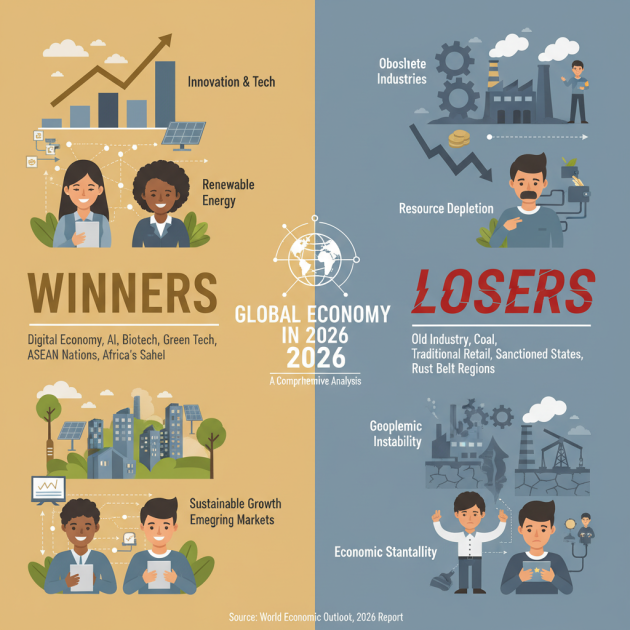
Winners in the Global Economy
1. Technology Companies
The technology sector has been a significant driver of economic growth. Companies involved in artificial intelligence, cloud computing, and cybersecurity are thriving. As digital transformation accelerates, these firms are capitalizing on the increased demand for innovative solutions.
2. Renewable Energy Sector
With the global push towards sustainability, the renewable energy sector is witnessing a boom. Nations are investing heavily in solar, wind, and other clean energy technologies, creating jobs and reducing reliance on fossil fuels. This sector is not only profitable but also plays a crucial role in combating climate change.
3. Emerging Markets
Countries like India, Vietnam, and Brazil are gaining traction as significant players in the global economy. Their youthful populations, combined with rising middle classes, are driving consumer demand. These emerging markets are becoming attractive destinations for foreign direct investment.
4. Health and Biotechnology Firms
The pandemic has underscored the importance of healthcare innovation. Companies focused on biotechnology, pharmaceuticals, and telehealth services are thriving as they address ongoing health challenges and invest in future therapies.
Losers in the Global Economy
1. Traditional Retailers
With the rise of e-commerce giants, traditional brick-and-mortar retailers are struggling to survive. Many are unable to adapt to changing consumer preferences and are experiencing declining sales, leading to store closures and layoffs.
2. Oil and Gas Industry
The shift towards renewable energy is taking a toll on the oil and gas sector. As countries set ambitious emissions targets, demand for fossil fuels is expected to decline, leading to job losses and investment challenges in this industry.
3. Aging Populations in Developed Countries
Countries with aging populations, such as Japan and parts of Europe, face economic stagnation. A shrinking workforce and increasing healthcare costs are burdening these economies, making it difficult to foster growth.
4. Countries with Political Instability
Political unrest can hinder economic development. Nations grappling with corruption, conflict, or poor governance are likely to see foreign investment dwindle, exacerbating their economic challenges.
Key Factors Influencing Winners and Losers
Several factors are influencing the dynamics of winners and losers in the global economy:
- Technological Advancements: The rapid pace of technology adoption is reshaping industries.
- Climate Change Policies: Governments are increasingly implementing regulations that promote sustainability.
- Global Trade Dynamics: Changing trade agreements and tariffs can either benefit or harm countries and businesses.
- Consumer Behavior: Evolving consumer preferences are driving demand for new products and services.
Conclusion
The global economy in 2026 is characterized by a complex interplay of winners and losers. While technology, renewable energy, and emerging markets are thriving, traditional retailers, the oil and gas industry, and countries with political instability face significant challenges. Understanding these dynamics is crucial for businesses and policymakers aiming to navigate the future effectively.