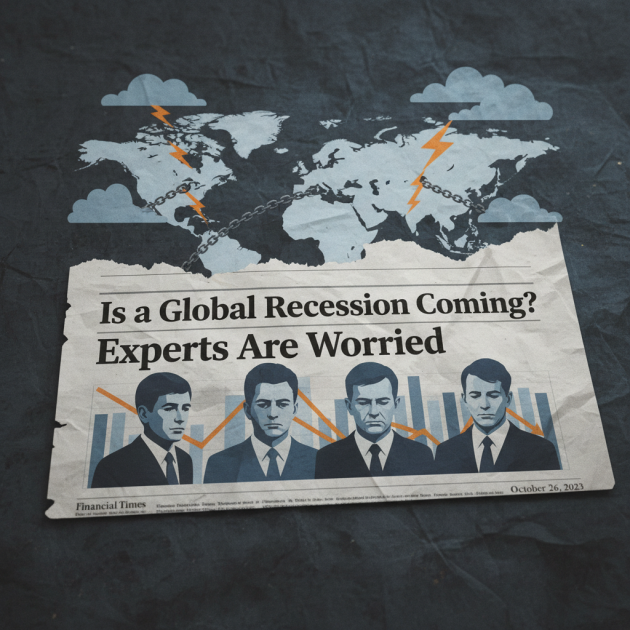

Understanding the Current Economic Landscape
As we navigate through 2023, economic uncertainties loom large, with inflation rates at historic highs and supply chain disruptions continuing to affect global markets. Many analysts and economists are raising alarms about the possibility of a global recession. But what exactly does this mean for the average person and the world economy as a whole?
What is a Global Recession?
A global recession is defined as a significant decline in economic activity across the world, lasting for an extended period of time, typically visible in GDP, income, employment, manufacturing, and retail sales. Historically, such downturns have led to widespread financial hardship, affecting not just economies but the lives of billions.
The Signs of a Potential Recession
Several indicators suggest that a recession might be on the horizon:
- Inflation Rates: Inflation has surged in many countries, driven by increased consumer demand, supply chain issues, and rising energy prices.
- Interest Rates: Central banks, including the Federal Reserve, are raising interest rates to combat inflation, which can slow down economic growth.
- Stock Market Volatility: Increased fluctuations in stock prices can signal investor uncertainty and a lack of confidence in the economy.
- Declining Consumer Confidence: As costs rise, consumers may cut back on spending, which is a critical component of economic growth.
- Geopolitical Tensions: Ongoing conflicts and tensions, such as the war in Ukraine and trade disputes, can exacerbate economic instability.
Expert Opinions on the Likelihood of a Recession
While some economists believe that a global recession is imminent, others argue that the situation is more nuanced. Dr. Jane Smith, a noted economist, states, "While we are seeing troubling signs, it is important to consider that economies often go through cycles. A recession is possible, but not guaranteed."
On the other hand, Professor Mark Johnson warns that the combination of high inflation and rising interest rates could lead to a significant slowdown. According to him, "If consumer spending continues to drop, we could see more businesses struggling, which would further amplify the risk of recession."
The Impact of a Recession
If a global recession does occur, the effects could be profound:
- Job Losses: As companies look to cut costs, layoffs may increase, leading to higher unemployment rates.
- Decreased Spending: Consumers may tighten their belts, leading to a decrease in demand for goods and services.
- Global Trade Decline: Lower demand can result in reduced international trade, affecting economies worldwide.
- Increased Poverty Rates: Economic downturns disproportionately affect low-income individuals and families, pushing more people into poverty.
What Can Be Done to Mitigate the Risks?
While a recession may be unavoidable, there are steps that governments and central banks can take to mitigate its effects:
- Fiscal Stimulus: Governments can provide financial assistance to businesses and individuals to stimulate economic activity.
- Monetary Policy Adjustments: Central banks can lower interest rates to encourage borrowing and spending.
- Infrastructure Investment: Investing in infrastructure can create jobs and stimulate economic growth.
Conclusion
The fear of a global recession is palpable as we see various indicators pointing towards economic uncertainty. While experts remain divided on the likelihood and timing of such a downturn, it is crucial for individuals and businesses to be prepared. Staying informed and adopting prudent financial practices can help weather the storm, should it arrive.