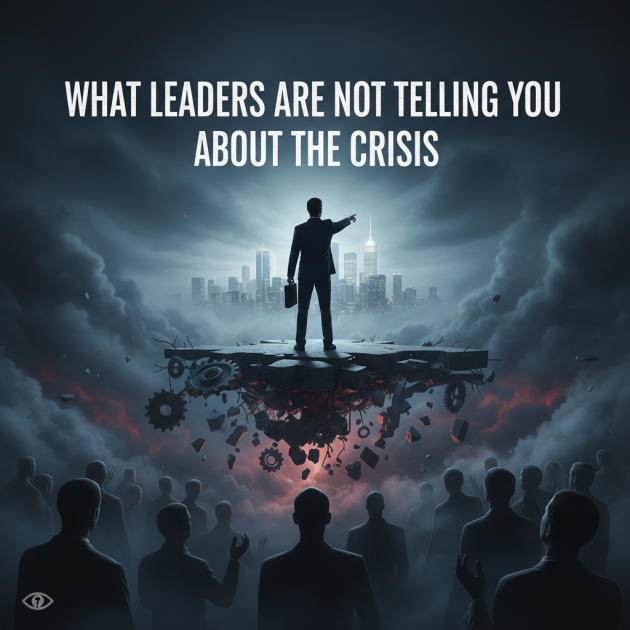

The Realities Behind the Crisis
In today's fast-paced world, leaders often communicate a polished version of reality during crises, presenting a narrative designed to instill confidence and maintain stability. However, beneath the surface, there are stark realities that are often glossed over. This article aims to shed light on what leaders might not be telling you about the current crisis, enabling you to navigate these turbulent times with greater awareness.
Understanding the Disconnect
The first step to grasping the full scope of any crisis is understanding the disconnect between leaders and the public. In times of uncertainty, leaders tend to focus on:
- Optimism: They emphasize positive outcomes to rally support.
- Control: They project an image of control to reassure stakeholders.
- Unity: They encourage collective action, often sidelining dissenting views.
This approach can lead to a lack of transparency, where critical issues are either downplayed or omitted entirely. As a result, the public may not grasp the full extent of the crisis or the necessary measures to address it.
Financial Implications
One of the most significant aspects leaders may not highlight is the financial implications of the crisis. While they may speak about recovery plans and investment opportunities, they often fail to address:
- The long-term economic impact on small businesses and individual livelihoods.
- The rising debt levels and potential inflation risks that could follow.
- The inequalities that are exacerbated during crises, affecting marginalized communities disproportionately.
Understanding these financial realities can empower individuals and businesses to make informed decisions instead of relying solely on leadership narratives.
Social and Psychological Effects
Leaders frequently address the logistical aspects of a crisis but may neglect the social and psychological repercussions. The emotional toll on communities includes:
- Increased anxiety and stress: Many people experience heightened levels of uncertainty, leading to mental health challenges.
- Social isolation: The crisis can exacerbate feelings of loneliness, especially in vulnerable populations.
- Trust issues: Ongoing misinformation can lead to a breakdown of trust in institutions and leaders.
These effects are crucial to acknowledge, as they require targeted interventions and support, which may not be adequately addressed in public discussions.
The Importance of Transparency
Transparency is vital during any crisis. When leaders are forthcoming about the challenges and uncertainties, it fosters trust and encourages collaboration. Here are a few reasons why transparency matters:
- Promotes informed decision-making: When the public understands the full scope of the crisis, they can make better personal and financial decisions.
- Encourages accountability: Leaders who are transparent about their limitations and challenges are held accountable, fostering a culture of responsibility.
- Builds resilience: Communities that are well-informed are better equipped to adapt and respond to crises.
Taking Control of Your Narrative
While leaders play a significant role in shaping the narrative around a crisis, individuals can also take charge of their narratives. Here’s how:
- Stay informed: Seek out reliable sources of information to understand the nuances of the situation.
- Engage in community discussions: Share experiences and insights with others to foster a collective understanding.
- Advocate for transparency: Encourage leaders to provide clear and honest communication about ongoing challenges.
Conclusion
In conclusion, while leaders play a crucial role in guiding us through crises, it's essential to recognize the narratives they present may not capture the full picture. By understanding the deeper realities of the current crisis, including economic implications, social effects, and the need for transparency, individuals can better navigate these turbulent waters. Equip yourself with knowledge, engage with your community, and advocate for a more transparent dialogue to create a more resilient society.