
Introduction
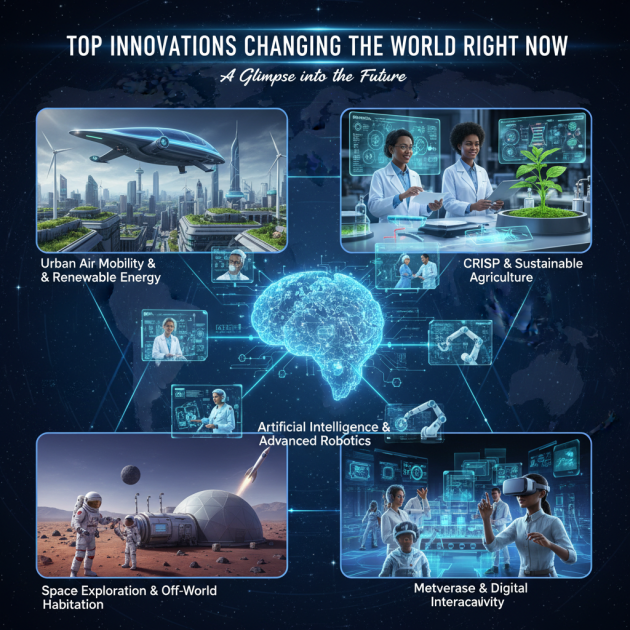
In an era marked by rapid technological advancements, several innovations are not just changing industries, but redefining the very fabric of our daily lives. From artificial intelligence to renewable energy, these cutting-edge technologies are paving the way for a brighter, more sustainable future. In this article, we will explore some of the top innovations that are currently transforming the world.
1. Artificial Intelligence (AI)
AI has emerged as one of the most significant technological trends of our time. With applications ranging from natural language processing to computer vision, AI is revolutionizing various sectors.
- Healthcare: AI algorithms are now capable of diagnosing diseases faster and more accurately than human doctors, enabling early detection and better treatment outcomes.
- Finance: AI-powered tools are streamlining operations, enhancing fraud detection, and providing personalized financial advice.
- Transportation: Autonomous vehicles are being developed to reduce accidents and improve traffic efficiency, promising safer roads for everyone.
2. Renewable Energy Technologies
As the world grapples with climate change, renewable energy technologies are gaining prominence. Innovations in solar, wind, and battery storage are leading the charge.
- Solar Energy: New photovoltaic materials are increasing the efficiency of solar panels, making solar energy more accessible and affordable.
- Wind Energy: Offshore wind farms are becoming more prevalent, harnessing stronger and more consistent winds to generate power.
- Energy Storage: Advances in battery technology, particularly lithium-ion and solid-state batteries, are enabling better energy storage solutions, crucial for intermittent renewable sources.
3. Blockchain Technology
Blockchain is no longer just the backbone of cryptocurrencies; it is revolutionizing various sectors by providing secure and transparent ways to conduct transactions.
- Supply Chain Management: Blockchain enhances traceability, ensuring that products are sourced ethically and delivered efficiently.
- Healthcare: It helps secure patient data and streamline processes, improving the overall quality of care.
- Finance: Decentralized finance (DeFi) platforms are reshaping traditional banking by offering more accessible financial services to underserved populations.
4. 5G Technology
The rollout of 5G networks is expected to transform communication and connectivity. With significantly higher speeds and lower latency, 5G opens up new possibilities.
- Smart Cities: 5G will enable the development of smart infrastructure, improving public services and connectivity.
- Internet of Things (IoT): Enhanced connectivity will allow millions of devices to communicate seamlessly, driving innovation in home automation, healthcare, and more.
- Augmented Reality (AR) and Virtual Reality (VR): 5G will enhance AR and VR experiences, making them more immersive and practical for various applications, from gaming to training.
5. Biotechnology
Biotechnology is at the forefront of medical and agricultural advancements. Innovations in this field are improving health outcomes and food security.
- Gene Editing: Technologies like CRISPR are revolutionizing genetics, enabling precise modifications to DNA that can lead to cures for genetic disorders.
- Personalized Medicine: Tailoring treatments based on genetic profiles is becoming more feasible, improving the effectiveness of therapies.
- Sustainable Agriculture: Biotech crops are being developed to withstand climate change, pests, and diseases, ensuring food production can keep pace with growing populations.
Conclusion
These innovations are not just trends; they represent a shift towards a more connected, sustainable, and efficient world. As these technologies continue to evolve, we can expect them to have profound effects on our lives, economies, and the environment. Staying informed about these changes is crucial as we navigate this new technological landscape.