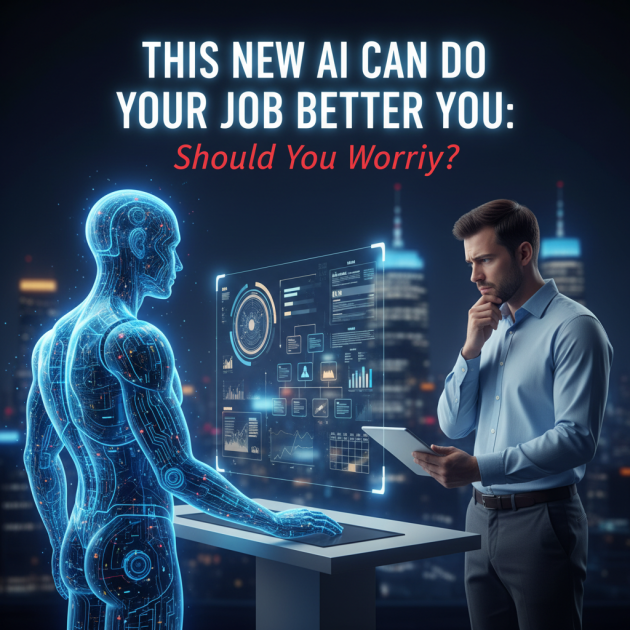

The Rise of AI in the Workplace
In recent years, artificial intelligence (AI) has made significant strides, transforming various industries and redefining job roles. From customer service chatbots to advanced data analysis tools, AI is increasingly capable of performing tasks traditionally handled by humans. But as these technologies advance, a pressing question arises: should we worry about AI taking our jobs?
Understanding AI's Capabilities
AI encompasses a broad range of technologies, including machine learning, natural language processing, and robotics. These systems are designed to analyze data, learn from it, and make decisions, often at a speed and efficiency far beyond human capabilities.
- Efficiency: AI can process vast amounts of data quickly, leading to faster decision-making.
- Consistency: Unlike humans, AI does not suffer from fatigue or emotional changes, resulting in consistent performance.
- Cost-Effectiveness: Companies can save on labor costs by automating tasks that were once done by employees.
Jobs at Risk
While AI may enhance productivity, it also poses a threat to various job sectors. Positions that involve repetitive tasks or data analysis are particularly vulnerable. According to a report by McKinsey, up to 800 million jobs could be displaced by automation by 2030.
Some jobs at high risk include:
- Manufacturing roles, where robots can assemble products faster.
- Customer service positions, which can be replaced by AI chatbots.
- Data entry jobs, as AI can handle data processing with greater accuracy.
Should We Be Concerned?
The rise of AI certainly raises concerns, but it is essential to view these advancements through a balanced lens. While some jobs may disappear, new ones will emerge as industries adapt to the changing landscape.
For instance, as AI systems become more prevalent, there will be a growing demand for professionals who can develop, maintain, and improve these technologies. Additionally, jobs that require emotional intelligence, creativity, and complex problem-solving are less likely to be threatened by AI.
Preparing for the Future
Rather than fearing AI, individuals can take proactive steps to position themselves for success in a changing job market:
- Upskill: Invest in learning new skills, particularly those that complement AI technologies.
- Embrace Lifelong Learning: Stay updated with industry trends and continue to learn throughout your career.
- Develop Soft Skills: Focus on building skills like communication, leadership, and emotional intelligence that are difficult for AI to replicate.
The Human Touch
While AI can perform many tasks efficiently, there remains an essential aspect of human interaction that technology cannot replicate. Jobs that require empathy, understanding, and personal connection—such as healthcare, counseling, and creative fields—will continue to thrive.
Moreover, companies that prioritize a human-centric approach are likely to succeed in a world increasingly influenced by AI. Combining the strengths of both AI and human workers can lead to innovative solutions and better outcomes.
Conclusion
The emergence of AI in the workplace brings both challenges and opportunities. While it can enhance productivity and efficiency, it also requires workers to adapt and evolve. By embracing change, upskilling, and focusing on uniquely human qualities, individuals can thrive alongside AI rather than be threatened by it.