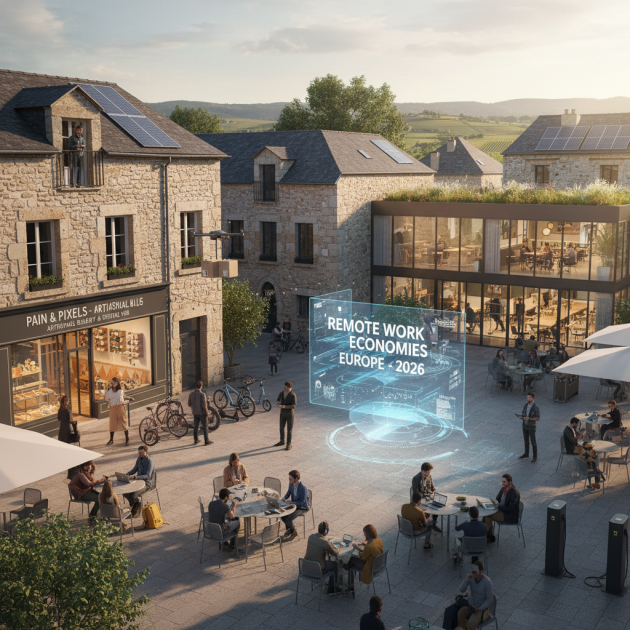

The Rise of Remote Work Economies in Europe
As we step into 2026, the landscape of work in Europe has undergone a profound transformation due to the rise of remote work. The COVID-19 pandemic accelerated a trend that was already in motion, and now, the remote work economy is not just a temporary solution but a permanent fixture in our lives.
Understanding the Remote Work Economy
The remote work economy refers to a system where employees can perform their jobs from anywhere, leveraging technology to connect with colleagues and clients. This shift has been driven by several factors:
- Technological Advancements: High-speed internet, collaboration tools, and cloud computing have made remote work feasible and efficient.
- Work-Life Balance: Many workers now prioritize flexibility and a healthier work-life balance, prompting businesses to adapt.
- Global Talent Pool: Companies can hire talent from diverse geographical locations, leading to increased competition and innovation.
Impact on Local Businesses
The rise of remote work has significantly impacted local businesses across Europe. Here’s how:
1. Shifts in Consumer Behavior
As remote workers settle into new routines, their spending habits have evolved. Many have relocated from urban centers to suburban or rural areas, leading to increased demand for local goods and services. Businesses in these regions have seen a surge in customers as remote workers seek convenience and community.
2. Transformation of Office Spaces
With a significant portion of the workforce remaining remote, companies are reconsidering their need for physical office spaces. This has led to:
- Reduced Real Estate Costs: Businesses are downsizing their office spaces or adopting hybrid models, freeing up capital for other investments.
- Co-Working Spaces: The demand for flexible workspaces has skyrocketed, with co-working spaces becoming hubs for remote workers to collaborate.
3. Local Economic Growth
As remote workers contribute to their local economies, communities are witnessing a revitalization:
- Increased Local Investments: Businesses are investing in local infrastructure, such as internet connectivity and transportation.
- Support for Local Startups: More remote workers are opting to start their businesses, leading to a rise in entrepreneurship.
Reshaping Urban Economies
Urban economies are also experiencing significant changes due to the rise of remote work. Major cities are adapting to new realities:
1. Redefining Urban Spaces
With fewer people commuting to offices, cities are rethinking the use of urban spaces. Parks, public squares, and community centers are becoming essential for remote workers seeking a change of scenery.
2. Transportation Trends
The decrease in daily commutes has led to reduced traffic congestion and pollution, prompting cities to invest in sustainable transportation options, such as cycling paths and electric public transit.
3. Enhanced Digital Infrastructure
As remote work becomes the norm, cities are prioritizing the development of digital infrastructure to support connectivity. This includes:
- High-Speed Internet Access: Expanding access to high-speed internet in rural and underserved areas.
- Smart City Initiatives: Implementing technology-driven solutions to improve urban living and working conditions.
Conclusion: Embracing the Future
As we navigate through 2026, the rise of remote work economies in Europe is reshaping local businesses and urban economies in unprecedented ways. By embracing this change, communities can create vibrant, sustainable environments that benefit both residents and businesses alike. The future of work is here, and it is time to adapt and thrive in this new landscape.