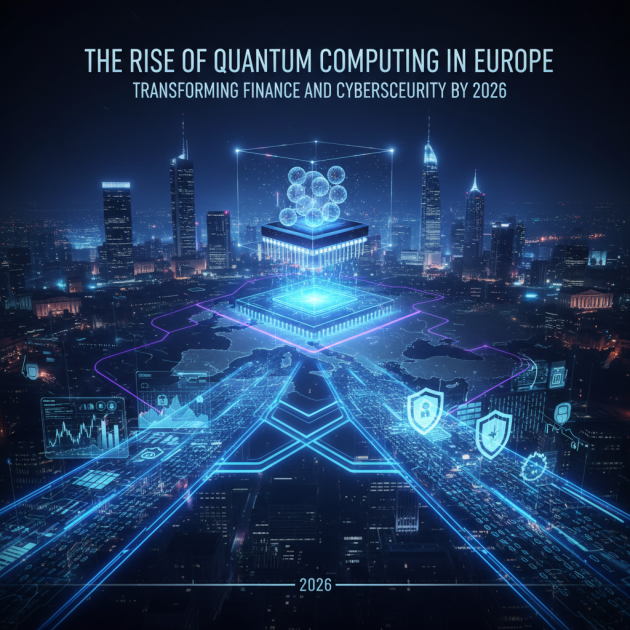

The Quantum Leap: Understanding Quantum Computing
Quantum computing represents a revolutionary leap in computational power, utilizing the principles of quantum mechanics to perform calculations at unprecedented speeds. Unlike classical computers, which use bits as the smallest unit of data (0s and 1s), quantum computers use qubits, allowing for a vastly larger space of possibilities for computation. This technology is not just a theoretical concept; it is now being actively developed and implemented across various sectors in Europe.
The European Quantum Landscape in 2026
By 2026, Europe has established itself as a major player in the quantum computing arena. With significant investments from both public and private sectors, countries like Germany, France, and the Netherlands are at the forefront of research and development. The European Union has also launched initiatives such as the Quantum Flagship program, aiming to consolidate resources and expertise to propel Europe into a leadership position in quantum technology.
Key Players and Innovations
- Research Institutions: Prestigious universities and research centers are collaborating to advance quantum algorithms and hardware.
- Startups: A wave of innovative startups is emerging, focusing on quantum software solutions tailored for specific industries.
- Corporate Investment: Major tech companies are investing heavily in quantum research, forming partnerships with academic institutions to fuel innovation.
Impact on Finance
The finance industry is one of the sectors poised to benefit the most from quantum computing. The ability to process vast amounts of data quickly and efficiently can lead to significant advancements in various financial applications.
Advanced Risk Analysis
Quantum computing’s ability to analyze complex datasets allows financial institutions to perform risk assessments that are far more accurate than current methods. Banks can simulate multiple market scenarios almost instantaneously, enabling them to make more informed decisions and manage risks effectively.
Optimized Trading Strategies
Quantum algorithms can help traders optimize their strategies by quickly analyzing historical data and market trends. This capability can lead to more profitable trades and reduced market inefficiencies, ultimately benefiting investors and consumers alike.
Transforming Cybersecurity
As quantum computing advances, it also holds the potential to revolutionize cybersecurity, a critical concern for businesses and governments alike. The ability of quantum computers to break traditional encryption methods poses new challenges.
Quantum-Resistant Encryption
In anticipation of quantum attacks, researchers are developing quantum-resistant encryption algorithms. These new cryptographic techniques will protect sensitive information from being compromised by the powerful computational abilities of quantum machines.
Enhanced Security Protocols
Quantum key distribution (QKD) is one of the most promising applications of quantum technology in cybersecurity. QKD allows secure communication channels that cannot be easily intercepted, ensuring that confidential data remains protected even in the face of advanced threats.
The Road Ahead
As we look towards the future, the integration of quantum computing into finance and cybersecurity is just the beginning. The potential applications are vast, ranging from drug discovery to artificial intelligence, and the impact on industries will be profound.
However, the transition to a quantum-enabled world will require new frameworks, regulations, and educational initiatives to prepare the workforce for the upcoming technological changes. Europe is well-positioned to lead this charge, fostering an environment of collaboration and innovation that can shape the future of technology.
Conclusion
The rise of quantum computing in Europe by 2026 is set to transform industries like finance and cybersecurity dramatically. As we embrace this new era of technology, the potential for breakthroughs is limitless, promising a future where quantum capabilities redefine how we solve complex problems and safeguard our digital landscape.