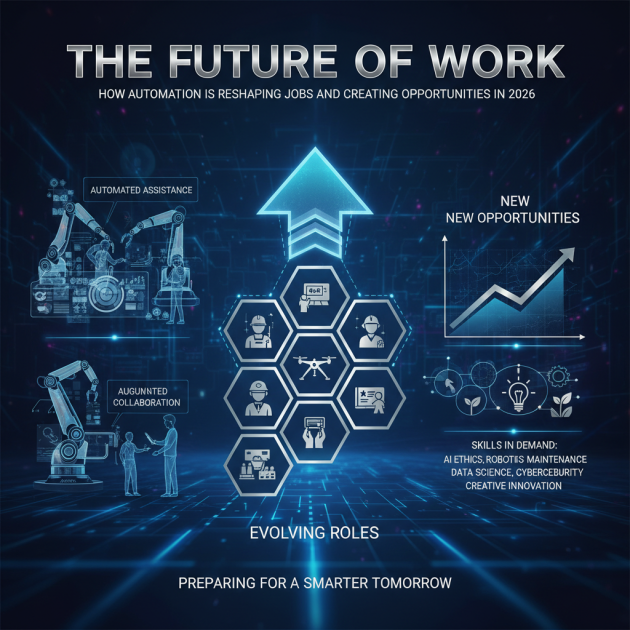

The Automation Revolution: A 2026 Perspective
As we step into 2026, the impact of automation on the workforce has become increasingly pronounced. Businesses across numerous sectors are rapidly adopting technology to optimize efficiency and productivity, leading to significant shifts in job roles and opportunities.
Understanding Automation
Automation refers to the use of technology to perform tasks without human intervention. This includes everything from simple robotic processes to advanced artificial intelligence systems capable of learning and decision-making. In 2026, we've witnessed automation's reach expand into many areas, including:
- Manufacturing
- Healthcare
- Finance
- Retail
- Transportation
Job Displacement: The Inevitable Shift
One of the most significant consequences of automation is the displacement of certain job categories. Roles that involve repetitive tasks or basic decision-making are particularly vulnerable. For instance:
- Manufacturing jobs have increasingly been replaced by robots capable of performing assembly line tasks more efficiently.
- In retail, self-checkout systems and automated customer service bots have minimized the need for traditional cashier roles.
- In the finance sector, algorithms are handling data analysis and risk assessment, leading to fewer entry-level positions.
Creating New Opportunities
While automation has disrupted many traditional jobs, it has also paved the way for new opportunities. Here are some sectors witnessing growth:
1. Tech and IT
As automation technologies advance, there is a growing demand for professionals who can develop, maintain, and improve these systems. Roles such as:
- AI specialists
- Data scientists
- Cybersecurity experts
- Automation engineers
2. Healthcare
Automation in healthcare is not about replacing jobs but rather enhancing them. With the rise of telemedicine and AI diagnostics, healthcare professionals are needed to interpret data and provide patient care. New roles include:
- Telehealth coordinators
- Health informatics specialists
3. Green Jobs
As businesses focus on sustainability, automation is facilitating the transition to greener practices. This has led to the emergence of roles in:
- Renewable energy technology
- Sustainable agriculture
- Environmental monitoring
The Importance of Reskilling
To navigate this changing landscape, reskilling is crucial. Workers must adapt to the evolving job market by acquiring new skills relevant to automated environments. Governments and educational institutions are responding by:
- Implementing training programs
- Offering online courses in emerging fields
- Encouraging partnerships between industries and educational institutions
Conclusion: Embracing Change
As we look forward to the future, it is clear that automation will continue to reshape the job market. While it may lead to the replacement of some jobs, it simultaneously creates new opportunities that can drive economic growth and innovation. By embracing change and focusing on continuous learning, workers can thrive in the age of automation.