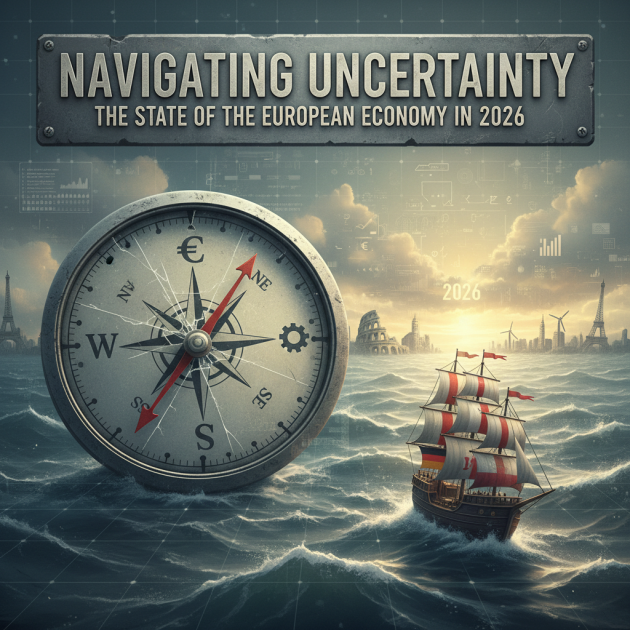

The European Economic Landscape in 2026
As we delve into the economic climate of Europe in 2026, it is evident that the continent is navigating a complex web of challenges and opportunities. With inflation remaining a central issue, interest rates fluctuating, and countries adapting to global economic pressures, the future of the European economy looks both precarious and promising.
Inflation Trends Across Europe
By 2026, inflation has become a persistent concern for many European nations. After peaking in the early 2020s, inflation rates have shown signs of stabilization, yet they remain above the European Central Bank's (ECB) target of 2%. For instance, countries like Germany and France have reported inflation rates hovering around 4%, driven by energy prices and supply chain disruptions.
Regional Variations
- Germany: The industrial powerhouse is grappling with rising production costs, impacting its export-driven economy.
- France: Consumer spending has been affected by higher prices, leading to cautious optimism as the government implements measures to support households.
- Italy: Struggling with economic reforms, Italy's inflation rate has slightly decreased but remains a concern for its public finance stability.
- Spain: Benefiting from increased tourism, Spain's inflation is moderated, but food prices continue to rise.
Interest Rates and Monetary Policy Adjustments
In response to inflationary pressures, the ECB has taken decisive action by adjusting interest rates. Throughout 2026, the ECB has implemented a series of gradual rate hikes, bringing the benchmark interest rate to 3.5%. This approach aims to curb inflation while balancing the need for economic growth.
Impact on Borrowing and Investment
The increased interest rates have had a dual effect on the European economy:
- Borrowing Costs: Higher rates have led to increased borrowing costs for both consumers and businesses, causing a slowdown in investment.
- Real Estate Market: The housing market has cooled as mortgage rates rise, leading to a shift in buyer sentiment.
Adapting to Global Economic Pressures
European countries are not only dealing with internal economic challenges but also adapting to global economic pressures. Factors such as geopolitical tensions, trade disruptions, and the ongoing effects of the COVID-19 pandemic have necessitated a reevaluation of economic strategies.
Country-Specific Responses
- Germany: The government has launched initiatives to boost green technology and digitalization to enhance productivity and competitiveness.
- France: Emphasizing social welfare, France has introduced policies aimed at protecting low-income households from inflation's impact.
- Italy: The Italian government is focusing on structural reforms to improve its business environment and attract foreign investment.
- Spain: Spain is leveraging its tourism sector to drive economic recovery, with government incentives to boost domestic travel.
Looking Forward: The Path Ahead
As Europe moves through 2026, the landscape is marked by both challenges and opportunities. Policymakers are tasked with balancing inflation control while fostering growth and employment. The global economic environment will continue to play a pivotal role in shaping the trajectory of the European economy.
In conclusion, while the road ahead may be fraught with uncertainty, Europe's resilience and adaptability will be critical in navigating these turbulent economic waters.