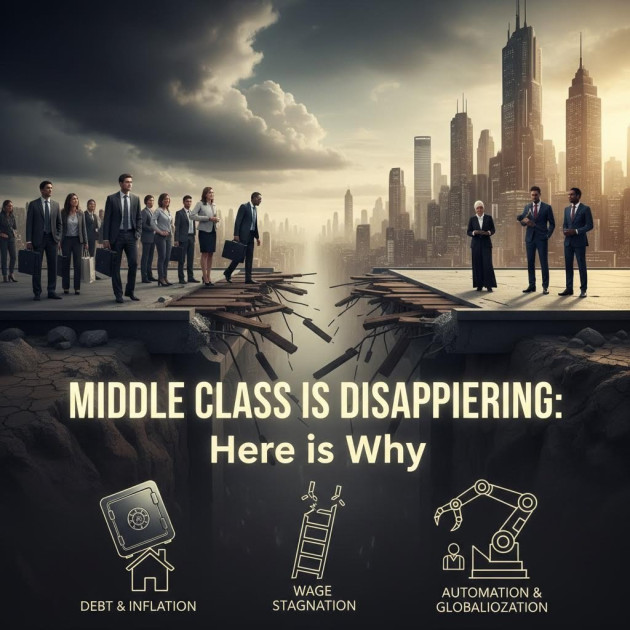

Understanding the Disappearance of the Middle Class
The middle class has long been viewed as the backbone of the economy, a symbol of stability and growth. However, in recent years, alarming trends have emerged, indicating that this crucial segment of society is disappearing. In this article, we will explore the reasons behind this phenomenon and its implications.
The Economic Landscape
One of the primary factors contributing to the decline of the middle class is the changing economic landscape. Factors such as globalization, technological advancement, and shifting job markets have all played significant roles.
Globalization and Offshoring
Globalization has led many companies to outsource jobs to countries where labor is cheaper. This offshoring trend has resulted in the loss of many middle-class jobs in developed nations. As companies seek to maximize profits, they often prioritize cost-cutting measures over maintaining local employment.
Technological Advancements
Technology has revolutionized the way we work, but it has also taken away many traditional jobs. Automation and artificial intelligence are replacing roles once held by middle-class workers, leading to job displacement and decreased opportunities for upward mobility.
Income Inequality
As the middle class shrinks, income inequality continues to rise. The wealth gap between the richest and poorest segments of society has widened, leaving the middle class to grapple with stagnating wages and increasing costs of living.
Stagnant Wages
- Despite rising productivity, wages for the middle class have stagnated for decades.
- Many workers find that their income has not kept pace with inflation, leading to decreased purchasing power.
- As a result, families are forced to cut back on essentials, further straining their economic situation.
Rising Costs of Living
In addition to stagnant wages, the cost of living has been steadily increasing. Housing, healthcare, and education costs have soared, making it increasingly difficult for middle-class families to maintain their standard of living.
Shift in Job Opportunities
The types of jobs available have also shifted dramatically. The decline of manufacturing jobs, which traditionally offered good pay and benefits to middle-class workers, has been replaced by low-wage service jobs that often lack stability and security.
Decline of Manufacturing
Once a stronghold for the middle class, the manufacturing sector has dwindled as companies move operations overseas or adopt automation technologies. This shift has resulted in fewer well-paying jobs available to workers without advanced degrees.
Rise of Gig Economy
The rise of the gig economy has created new opportunities, but many of these jobs are unstable and lack benefits. Freelancers and contract workers often struggle with inconsistent income and lack of health insurance, further marginalizing the middle class.
The Impact on Society
The disappearance of the middle class is not merely an economic issue; it has profound social implications as well. As the middle class shrinks, social mobility becomes increasingly difficult, leading to a cycle of poverty that can be hard to break.
Social Mobility
When the middle class contracts, it becomes harder for individuals to achieve upward mobility. Education, which is often seen as a pathway out of poverty, becomes less accessible due to rising tuition costs and student debt.
Political Discontent
The decline of the middle class can also lead to increased political polarization. As economic disparities grow, so does resentment towards the political establishment, which may be viewed as out of touch with the struggles of the average citizen.
Conclusion
The disappearance of the middle class is a complex issue influenced by a multitude of factors. As we move forward, it is crucial for policymakers, businesses, and communities to address these challenges head-on. Only by recognizing the underlying causes can we hope to reverse this troubling trend and restore balance to our economy and society.