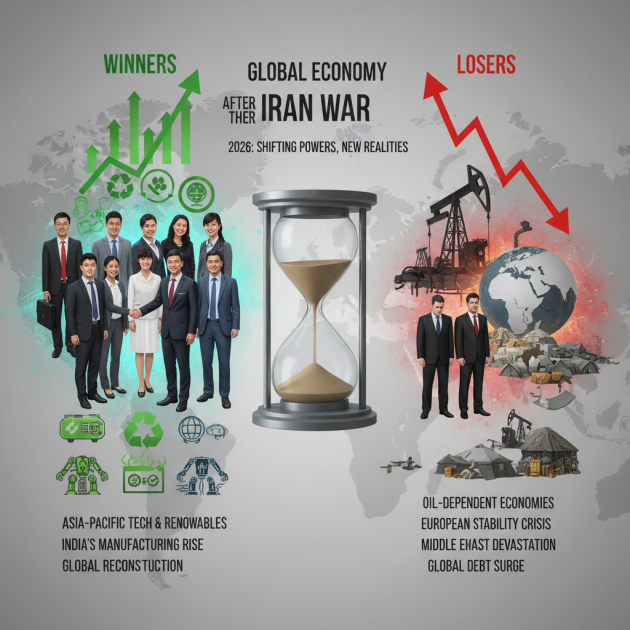

The New Economic Landscape Post-Iran War
The aftermath of the Iran War has left profound impacts on the global economy. As nations navigate the shifting dynamics, we explore the key players who have emerged as winners and losers in 2026.
Understanding the Conflict's Economic Impact
The Iran War, ignited by geopolitical tensions and energy disputes, has reshaped trade relationships and economic alliances across the globe. In the wake of the conflict, countries have had to adapt to new realities, leading to significant shifts in economic power.
Winners of the Post-War Economy
- Energy Exporters: Countries like Saudi Arabia and Russia have capitalized on increased oil prices due to supply disruptions. Their economies are thriving as they fill the void left by Iranian oil.
- Defense Contractors: With increased military spending across the globe, defense companies have seen a surge in profits. Nations prioritizing security have turned to these contractors for advanced technology and weaponry.
- Renewable Energy Sector: The conflict has accelerated investments in renewable energy as countries seek to reduce dependency on oil. Companies focused on solar, wind, and hydrogen technologies have flourished.
- Emerging Economies: Nations like India and Brazil have seized the opportunity to enhance their manufacturing sectors, attracting foreign investments looking for alternatives to traditional supply chains.
Losers in the Economic Shift
- Iran: Unsurprisingly, Iran has faced severe economic sanctions and isolation, crippling its economy and leading to a humanitarian crisis.
- Global Trade Partners: Countries heavily reliant on Iranian oil and goods have suffered. Nations such as Turkey and Lebanon have seen their economies decline as they struggled to find alternative sources.
- Tourism-dependent Economies: The conflict has deterred tourists from visiting Middle Eastern countries, which relied heavily on tourism revenue.
- Western Nations: While some sectors have benefitted, Western nations have faced inflationary pressures due to rising energy costs, impacting consumers and small businesses.
Geopolitical Ramifications
The economic shifts are not purely financial; they come with significant geopolitical ramifications. The realignment of alliances has created a new power structure. For example, China has strengthened its ties with Russia and Iran, aiming to secure its energy needs and expand its influence in the region.
Investing in a New Economy
Investors must adapt to this new landscape. Sectors witnessing growth, such as technology, renewable energy, and defense, present lucrative opportunities. However, caution is advised when considering investments in regions still experiencing instability.
The Future Outlook
Looking forward, the global economy in 2026 will be characterized by a greater emphasis on sustainability and resilience. Companies will prioritize diversified supply chains and invest in technologies that promote energy independence.
Conclusion
The Iran War has acted as a catalyst for change, forcing nations and industries to adapt and evolve. While some have emerged victorious, others are grappling with the consequences of the conflict. Understanding these dynamics is crucial for navigating the complexities of the global economy in the years to come.