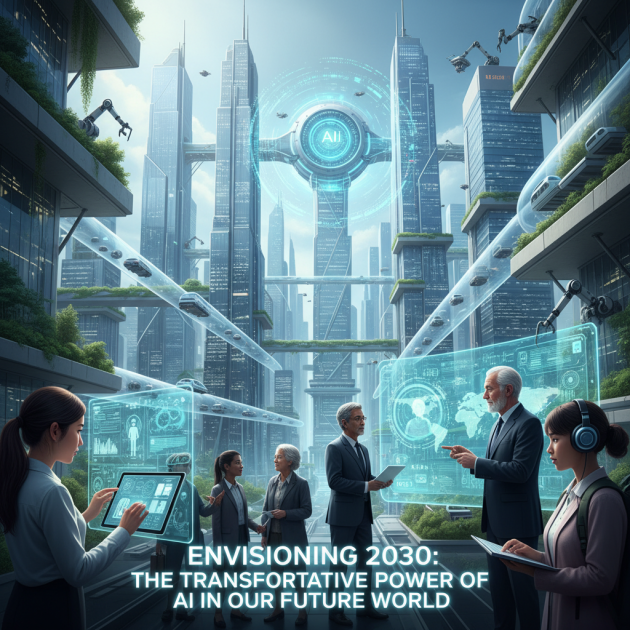

The Road to 2030: AI's Pivotal Role
As we stand on the brink of a new decade, the advancements in artificial intelligence (AI) are set to revolutionize our world by 2030. From enhancing daily routines to transforming entire industries, AI will play a crucial role in shaping the future of humanity.
AI in Daily Life
In 2030, AI will be seamlessly integrated into our daily lives, making tasks easier and more efficient. Smart homes equipped with AI assistants will anticipate our needs, adjusting settings based on our routines. Imagine a morning where your coffee is brewed to perfection, your favorite music plays, and your commute is optimized for minimal traffic—all without lifting a finger.
Revolutionizing Workplaces
The workplace will undergo a significant transformation, with AI systems automating mundane tasks and augmenting human capabilities. This shift will lead to:
- Increased Productivity: Employees will focus on higher-level thinking and creativity, while AI handles repetitive tasks.
- Remote Collaboration: Enhanced AI tools will facilitate seamless communication among remote teams, breaking geographical barriers.
- Personalized Work Environments: AI will analyze employee performance and preferences, creating customized workspaces that boost morale and productivity.
Education Transformed
Education in 2030 will be a personalized experience, thanks to AI's ability to tailor learning paths for individual students. Key developments will include:
- Adaptive Learning Systems: AI-driven platforms will assess students' strengths and weaknesses, providing customized resources and support.
- Virtual Classrooms: AI will facilitate immersive learning experiences through virtual reality, bringing subjects to life in ways never before imagined.
- Global Access: Education will become more accessible, with AI platforms breaking down language barriers and offering high-quality resources to underserved communities.
Healthcare Innovations
AI will revolutionize healthcare by 2030, enhancing diagnostics, treatment plans, and patient care:
- Predictive Analytics: AI will analyze patient data to predict health issues before they arise, allowing for proactive care.
- Personalized Medicine: Treatments will be tailored to individuals based on genetic information, improving efficacy and minimizing side effects.
- Telehealth Advancements: AI will improve telehealth services, making healthcare accessible to remote areas and ensuring timely interventions.
Smart Cities and Sustainable Development
By 2030, AI will contribute to the development of smart cities that prioritize sustainability and efficiency. Features will include:
- Intelligent Infrastructure: AI-driven traffic management systems will reduce congestion, leading to cleaner air and more efficient public transport.
- Resource Management: Smart grids will optimize energy consumption, while AI will help manage water and waste resources effectively.
- Public Safety: AI-enabled surveillance and emergency response systems will enhance public safety, ensuring quicker responses to incidents.
Ethical Considerations and Challenges
While the future promises exciting advancements, it also raises ethical questions regarding privacy, security, and employment. As AI continues to evolve:
- Privacy Concerns: Striking a balance between data utilization and individual privacy will be crucial.
- Job Displacement: Preparing the workforce for a changing job landscape will require investment in retraining and education.
- AI Regulation: Policymakers will need to establish frameworks to ensure responsible AI development and deployment.
Conclusion
The world of 2030 promises a profound transformation driven by artificial intelligence. While we embrace the opportunities that AI presents, it is imperative to navigate the accompanying challenges with foresight and responsibility. Together, we can build a future that harnesses the power of AI for the greater good.